
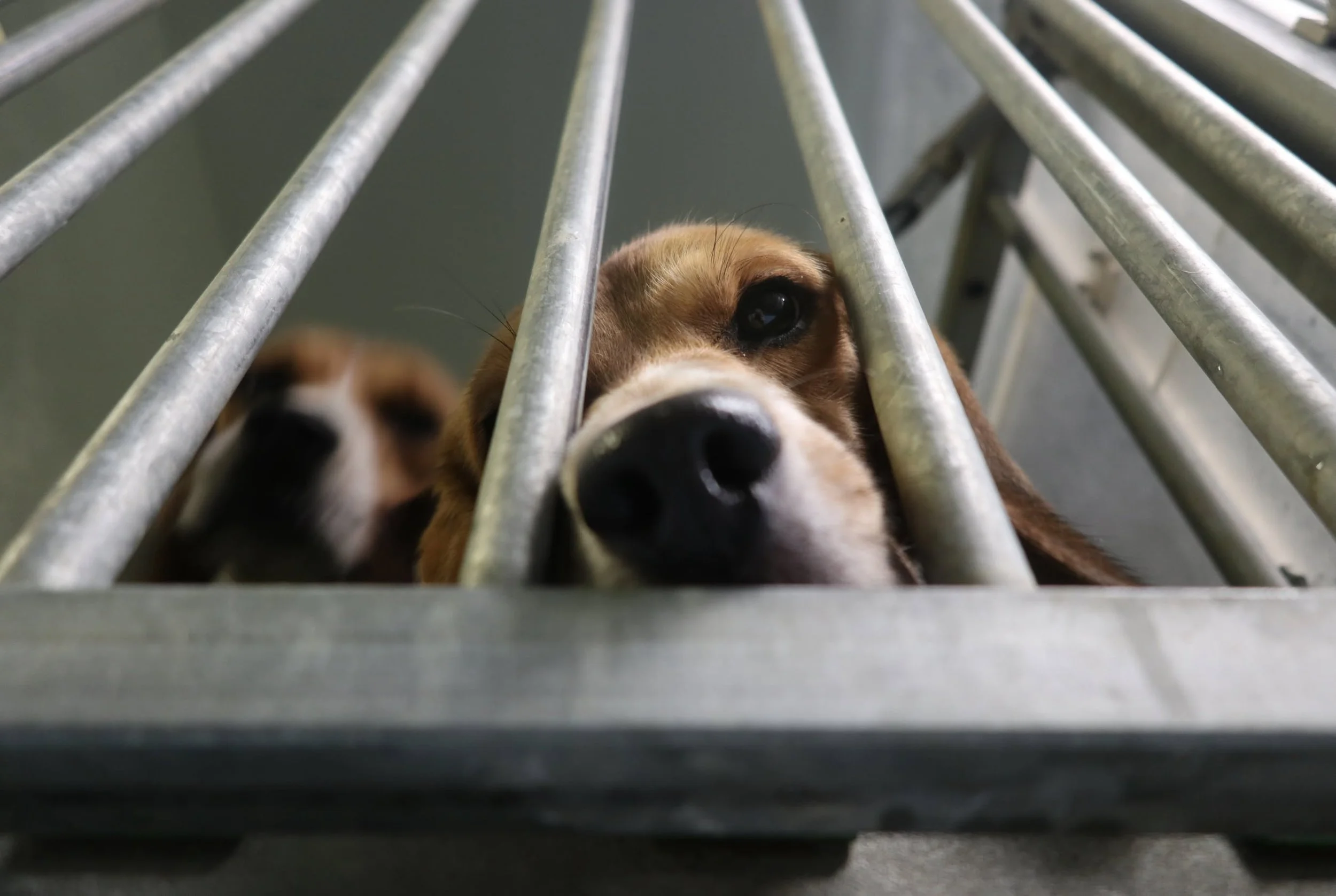
A St. Louis co-captain of the March to Abolish Animal Testing on what she saw in New York, what keeps her going, and why you belong on Delmar on December 3rd.
Some people learn about animal testing and look away. Brandi Smith went to New York to be “another set of boots on the ground.”
Brandi, a St. Louisan and Project Animal Freedom volunteer, joined the original March to Abolish Animal Testing (MAAT): 207 miles over two weeks to Marshall BioResources. She came home carrying a promise the marchers made to one another: “Until Every Cage Is Empty.”
Now she’s keeping that promise in her own backyard. On Thursday, December 3rd, Brandi will co-captain the March to Abolish Animal Testing - Washington University in St. Louis, part of a nationwide day of action with marches across the country. Our goal is 50+ St. Louisans. Reach it, and this will be the largest animal rights march in St. Louis history.
We asked Brandi about the march that changed her life, the animals behind the lab jargon, and what she’d tell anyone on the fence about coming. Here are her answers, in her own words.
March With Us
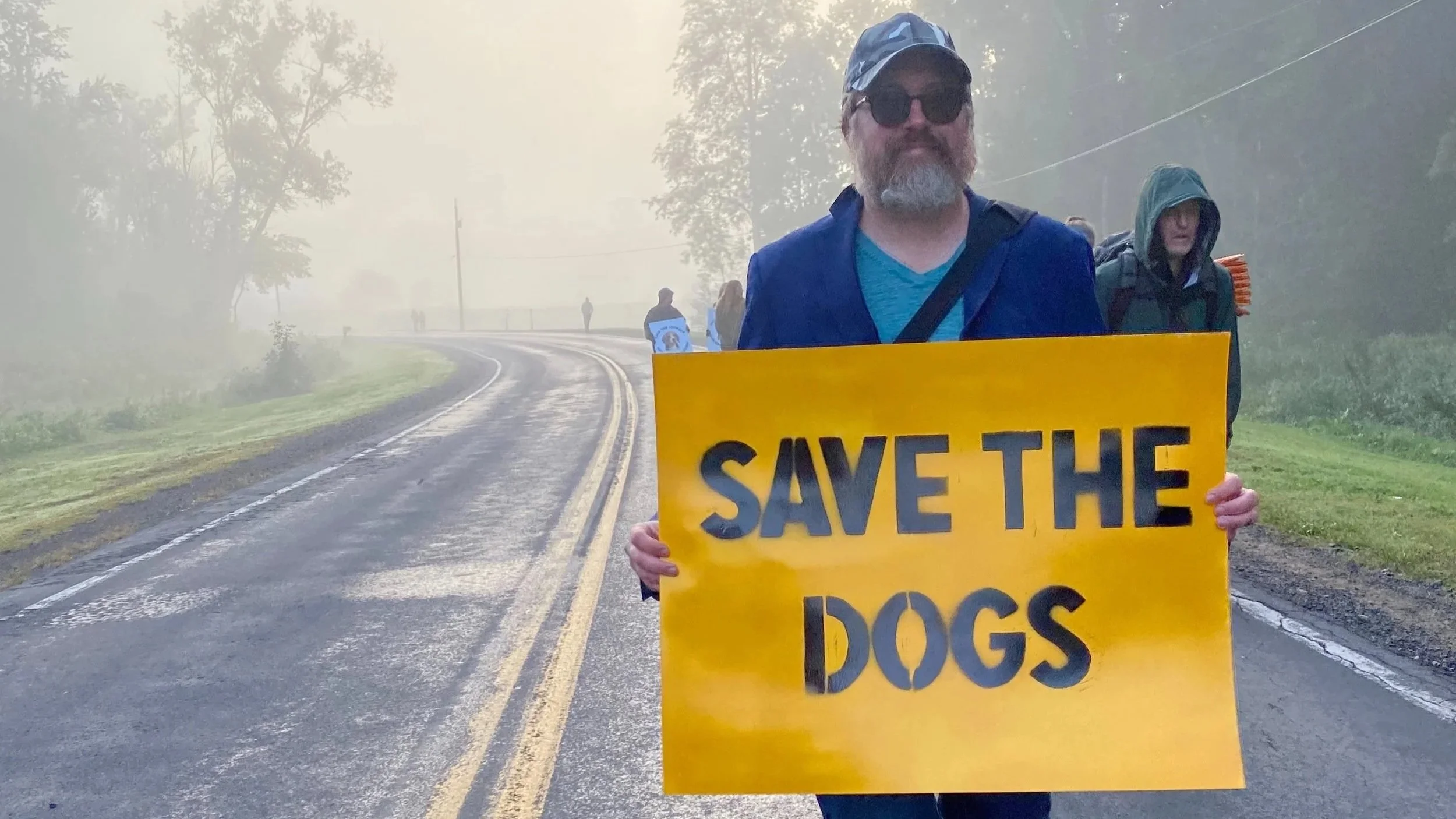
March to Abolish Animal Testing - Washington University in St. Louis
📅 When: Thursday, December 3rd, 11 a.m.-2 p.m.
📍 Where: Gather at the Chuck Berry Statue, 6539 Delmar Blvd, University City, MO 63130, then march down the Delmar Loop to WashU
✅ Register: Required for all marchers
👍 RSVP: Facebook event
ℹ️ Details: Event page
In Her Own Words: An Interview With Brandi Smith
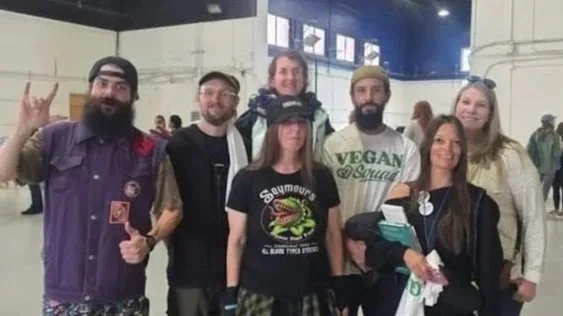
1. How would you like to be introduced?
Brandi Smith — St. Louis, Missouri. Co-captain of the St. Louis March to Abolish Animal Testing and volunteer with Project Animal Freedom.
2. How did you discover MAAT, and how life-changing has being involved with MAAT been for you?
I discovered MAAT after watching what happened at Ridglan Farms in Wisconsin. People had been fighting to protect those beagles for nearly ten years, while hundreds of animal-welfare violations were documented. When activists began attempting rescues, the footage brought national attention to what was happening inside. During the second major rescue attempt, I watched the live feed as police used tear gas and rubber bullets against activists. The courage and determination of those people, some of whom faced serious felony charges and the possibility of years in prison, really stayed with me. They kept fighting despite what it could cost them. Eventually, Ridglan Farms closed, and the focus turned toward Marshall BioResources. I remember thinking, how did I not know about this sooner? I wished I could have been there.
Then the march to Marshall BioResources was announced. At first, I thought there was no way I could go. I work, have dogs I’ve never left, and the logistics seemed impossible. But over the next few days, something tugged at me and said, “There’s absolutely no way I can miss this.” I wanted to be another set of boots on the ground. So I went.
Perhaps the most life-changing part was realizing I was capable of doing something I had convinced myself I couldn’t. This time, I told myself, “Yes, you can.”
3. What inspired you to travel all the way to New York to participate in the original MAAT? Where were other marchers from, and what inspired them to attend?
I was inspired by the sheer scale of the event. Marching 207 miles over two weeks definitely caught my attention. There was pressure building in so many areas, and it felt like we were reaching a tipping point. This was an opportunity to break through to the mainstream and show the world what was happening. People came from states across the country, each bringing their own personalities and ways of expressing why they were there.
What is especially meaningful is that the marches happening across the country on December 3rd are being organized by people who were present in New York. You can see just how far that original march’s impact has spread. Everyone understood how wrong these outdated methods are, and it was beautiful to see such diversity united under one cause. People were pushing themselves to do their part while also looking out for and taking care of one another.
4. What was your experience like during the original MAAT? What was the most inspiring part of your participation? The most soul-crushing?
The experience was uplifting, almost overwhelming, to see so many like-minded people gathered together for one purpose. But at the same time, it was heartbreaking to know why we were all there. The most inspiring part was witnessing so much compassion and determination in one place. The most soul-crushing part was knowing that even as we marched, trucks were still leaving with animals who had never known compassion, being transported to facilities where they would face more suffering. We were surrounded by people fighting to save lives, while knowing that other lives were still being sent away.
5. Are there any stories from the original MAAT that you find especially uplifting, discouraging, or otherwise powerful?
During the march, the phrase “Until Every Cage Is Empty” became more than just words. It became a pledge we were making to one another. Almost a promise that no matter what happened after those two weeks, we would keep fighting. It resonated so deeply that some people even got it tattooed, while others began using it as a hashtag.
We understood that the first march was just the beginning. And it has continued to this day. The MAAT chats are still incredibly active, filled with calls to action, ideas, encouragement, videos of actions being taken, and people finding new ways to keep the momentum going. We made a promise to keep showing up, to bring others into the movement, and to keep growing. We meant it.
6. Why are you excited to bring MAAT to St. Louis? How can locals support, and what would you tell someone on the verge of going?
I’m excited because this is an opportunity to help bring change to my own backyard. It’s a chance to show a whole new group of people that change is possible when communities come together. We can create positive change when we work toward something that benefits everyone. People may be scattered across the country, but on December 3rd, we’re all marching together for the same cause.
This march is for everyone. It’s a legal, peaceful, non-exclusive demonstration and an opportunity for everyday people to get involved, make their voices heard, and stand up for animals. You don’t have to belong to an organization or have experience with activism to participate. There’s a place for anyone who cares and wants to make a difference.
Even if someone can’t attend, they can still help by sharing information, encouraging others to come, downloading the Cruelty Cutter app to check products, and choosing products that aren’t tested on animals. Those everyday choices matter, too.
I’d tell anyone who’s considering coming to take that step. You don’t have to be an expert or have all the answers. You just have to care enough to show up. Every voice and every set of footsteps matters.
7. What are some of the most disturbing things you’ve discovered during your research of animal testing? What would you tell a researcher to convince them that animal experimentation is wrong?
The most disturbing thing I’ve discovered is that animal experimentation is still happening on such a massive scale, and that some people have become so disconnected from the suffering that they can accept it as necessary. We know animals are capable of feeling pain, fear, and distress, yet we continue to subject them to invasive experiments.
What’s especially frustrating is that science is advancing, and we have increasingly sophisticated alternatives, including organoids, organs-on-chips, and other human-based research methods. More than 90% of drugs that pass animal studies still fail to receive FDA approval, often because of problems with safety or effectiveness in humans. Why aren’t we putting more resources into methods that actually reflect human biology?
If I could tell a researcher one thing, it would be that innovation shouldn’t be held back by our unwillingness to move beyond outdated methods. We have the potential to do so much better, both for humans and for animals. We need to embrace that potential.
8. What do you think it will take to get more people involved in the movement to abolish animal testing, and what does a world free from animal testing and other animal cruelty look like to you?
I think it takes anger, not in a hateful sense, but the kind that moves people to act. People need to see what’s actually happening. Dogs undergo surgeries that injure the nerves controlling their vocal folds; rabbits have their forelegs repeatedly put under force, with some developing fractures, and then have pieces of bone removed after they’re euthanized; ferret kits are sacrificed for brain research; rhesus macaques have strokes deliberately induced; and pigs have major blood vessels cut and reconnected in experiments. Sadly these are just some examples.
These procedures are often buried in scientific language, making it easy to forget there are living beings behind the terminology. To me personally, a world without animal testing and other forms of cruelty would look like one where people have finally regained their humanity and learned to coexist with other living beings rather than exploit them.
Why WashU?
Brandi is right: these procedures hide behind scientific language. That’s why we’re taking this march to WashU’s doorstep. Together, we will:
🔦 Shine a light on animals suffering in WashU’s laboratories
🔬 Call on WashU to replace animal experiments with human-relevant, animal-free science
⛓️ Demand the abolition of all animal testing
December 3rd is only the beginning. MAAT will keep up the pressure through December and deliver signed letters to university administrators in January.
Take That Step
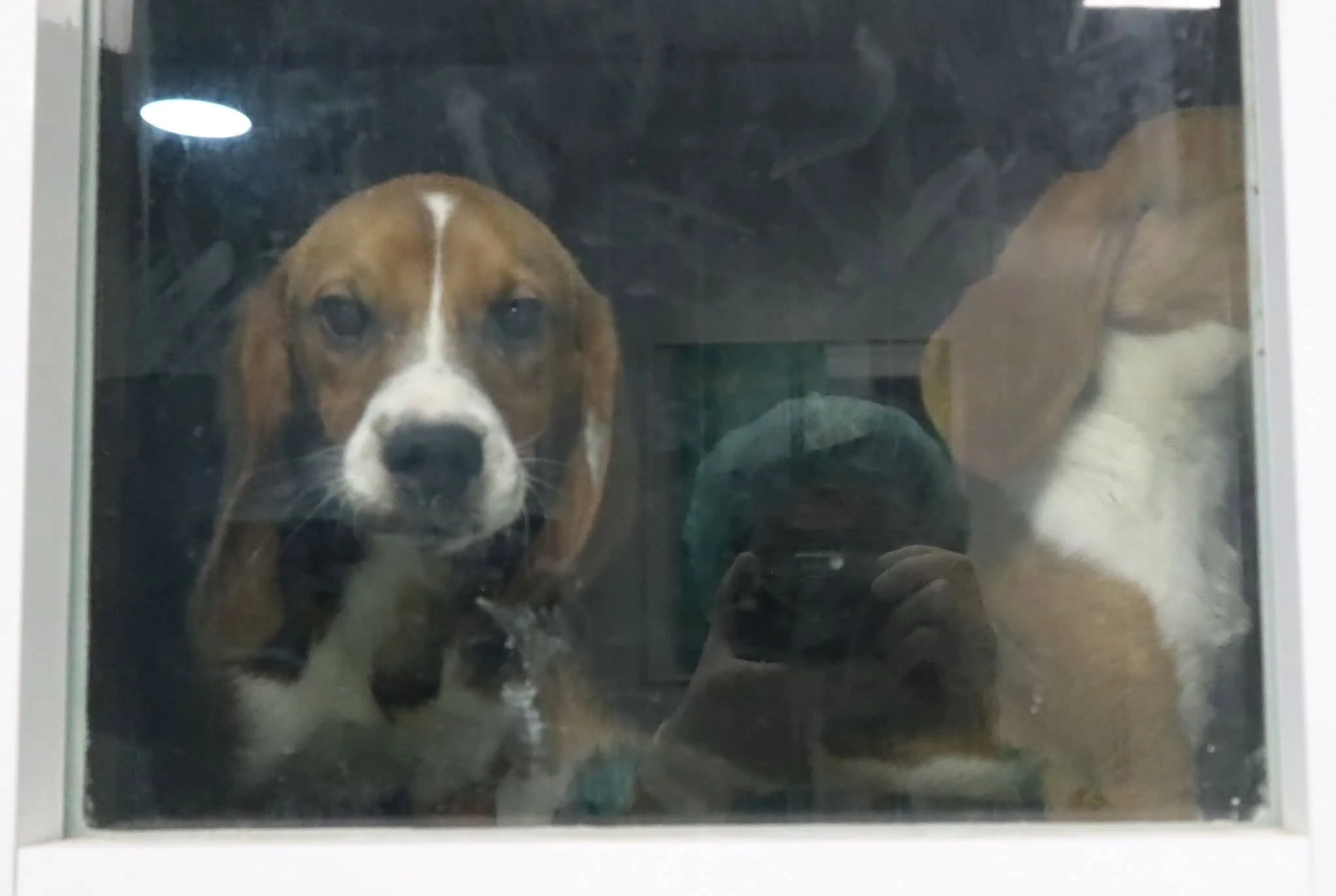
Brandi once told herself there was no way she could go. Then she went. If you’re on the verge, take it from her: “You don’t have to be an expert or have all the answers. You just have to care enough to show up.”
✅ Register through MAAT’s official sign-up form. Registration is required for all marchers and includes a nonviolence agreement.
👍 RSVP on Facebook and invite your friends. Every RSVP counts.
💬 Join the march’s WhatsApp group chat for updates.
🙌 Volunteer with VeganSTL to help make December 3rd a success.
Can’t make it? Share this article, encourage others to come, and check your products with the Cruelty Cutter app. As Brandi says, those everyday choices matter, too. Learn more about the national campaign at marchforanimals.org.
Until every cage is empty. See you on Delmar on December 3rd.